
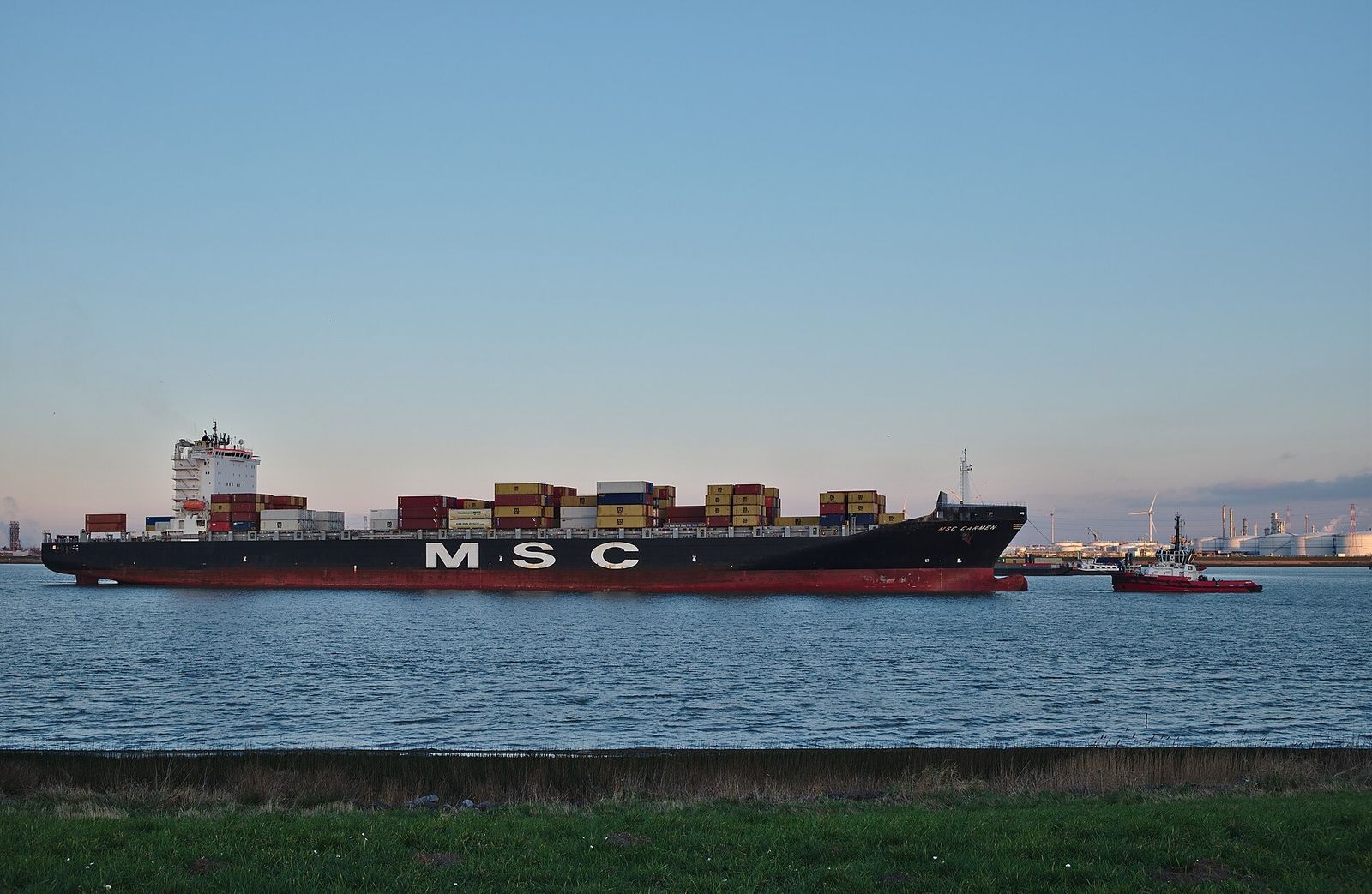
Ships are engineered assets, but they are bought, financed and operated for economic reasons. A naval architect choosing a speed or a cargo capacity, a superintendent planning a drydock or an analyst assessing a newbuilding all need to understand how shipping markets work and how investments are judged. This intermediate-level course introduces shipping economics, the make-up of the world fleet, the financial tools used to judge ship investments and the main freight markets. It covers the merchant fleet and its flags, shipping’s place in global trade, supply, demand and elasticity in transport markets, discounting and cashflow methods for appraising ships, financing, costs, revenues and investment criteria, and how freight rates form in the tanker, dry bulk and liner sectors. Worked problems and written assignments apply these tools to practical maritime economics questions.
Course at a glance: Duration 20 hours · Self-paced online · Level: Intermediate · 8 sections, 29 lessons, a 112-page downloadable course book
What you will learn
- Describe the structure of the world merchant fleet, flagging practices and shipping’s role in world trade.
- Apply supply-and-demand and elasticity analysis to maritime transport markets.
- Explain derived demand for sea transport and basic cost theory.
- Perform time-value-of-money and cashflow calculations used in ship investment appraisal.
- Evaluate ship financing, cost structures, revenues and measures of investment merit.
- Explain the structure and freight-rate mechanisms of the tanker, dry bulk and liner markets.
- Solve practical maritime economics problems and case studies.

Inside the course: a high-level summary, section by section.
The world fleet and trade
Shipping economics starts with scale. Looking at the world fleet reveals both its size and the cargoes it exists to carry, and the course links each ship type, from tankers and bulkers to container ships, with its cargo and the trades it serves. Flags and registration explain how ships are registered and why owners choose particular registries, and ownership and trade patterns show how the fleet is distributed and how shipping supports world trade.
Supply, demand and elasticity
Market equilibrium and revenue are introduced through supply and demand. Elasticity, the responsiveness of demand or supply to price, is applied in practice to understand why freight rates can be highly volatile and how revenue responds to price changes. Demand for sea transport is a classic case of derived demand: it exists because firms and consumers want an end product to be produced, moved or sold, not because transport is consumed for its own sake. The strength of that demand depends on factors such as demand for the final good. Cost theory basics, fixed and variable costs, average and marginal cost, complete the economic toolkit.
Time value of money and cashflow
Money today is not the same as money later. Owners, banks and analysts care about more than paper profit; they need to know the investment will produce cash when payments are due. Compounding, discounting and the time value of money are explained, along with the reasons accounting profit and cash can tell different stories, a distinction that matters for appraisal, credit control and staying solvent through shipping cycles. The treatment of depreciation, which spreads the cost of a ship over its life in the accounts without being a cash item, is explained as part of this picture. Voyage cashflow analysis shows how a single voyage generates revenue and incurs costs, and annual and discounted cashflow methods extend this to the life of a ship. A finance techniques assignment applies the methods.
Ship finance, costs and revenue
The price of the ship is only one input to an investment decision. How the purchase is financed, through equity, yard credit or bank loans, decides the owner’s upfront cash commitment, the burden of fixed repayments on later earnings and the project’s vulnerability in a weak market. Revenue and running costs are analysed, distinguishing capital costs, operating costs and voyage costs.
Measures of merit
Investment appraisal uses several measures of merit, and the course stresses that each answers a specific question: value creation, payback speed or the break-even freight rate. Net present value, internal rate of return, payback and required freight rate are discussed, along with where each can give a misleading impression if used alone. Knowing the formulas matters less than knowing which measure suits the decision at hand.


The major shipping markets
The tanker market is easier to understand when how ships are contracted is separated from how freight is priced. Tanker rates can swing sharply because demand, ship supply and voyage timing all shift together. Spot pricing is treated as a market signal and connected to freight-rate formulas and the Worldscale system. The dry bulk market is examined in terms of its cargoes, ship size subsegments from Handysize to Capesize and freight mechanisms. Because the size classes are not perfect substitutes, each behaves partly as a separate market, and Baltic Exchange indices are explained as reference signals of market conditions rather than set prices. The liner market works very differently from tramp markets: vessels run advertised services to timetables, so prices reflect network design, frequency, reliability and heavy fixed costs as well as the economics of each voyage.
Worked problems and case study
The final section brings the tools together in worked assessment problems and a case study assignment, applying market analysis, cashflow methods and measures of merit to practical maritime economics questions.
Engineering decisions with economic consequences
A recurring message is that technical choices have economic consequences. Ship speed, size, fuel consumption, crewing and maintenance all feed into running costs, revenue and investment merit, so the most elegant engineering solution is not always the most economic. Engineers who can frame design options in terms of cashflow and required freight rate can communicate far more effectively with owners, financiers and commercial teams, and can contribute to decisions that are both technically sound and commercially viable.
Why this matters in practice
Naval architects, marine engineers, superintendents, ship managers and maritime analysts all make or influence decisions that are ultimately judged economically. Understanding markets, cashflow, finance and investment appraisal allows them to evaluate projects, support business cases and understand why the shipping industry behaves as it does.
Together these themes give a joined-up picture of shipping as a business, linking the fleet, the markets it serves and the financial reasoning behind every ship ordered or sold.
Key takeaways
You leave able to describe the world fleet and its trade role, apply supply, demand, elasticity and derived-demand concepts, perform time-value and cashflow analysis, evaluate ship finance, costs and measures of merit, and explain how the tanker, dry bulk and liner markets set freight rates.
How you study
The course is delivered fully online and is self-paced, so you can fit roughly 20 hours of study around professional commitments. Lessons combine clear explanation with examples, diagrams and short interactive checks, and the main sections end with graded quizzes (6 in total) so you can confirm you can apply each method before moving on. A 112-page course book can be downloaded and printed for offline reading and later reference.
Course contents
- Shipping and the World Fleet: Why Shipping Matters; World Fleet Structure; Flags and Registration; Ownership and Trade Patterns
- Supply, Demand and Cost Theory: Equilibrium and Revenue; Elasticity in Practice; Derived Demand for Transport; Cost Theory Basics
- Time Value and Cashflow: Time Value of Money; Cashflow vs Profit; Voyage Cashflow Analysis; Annual and Discounted Cashflow; Finance Techniques Assignment
- Investment, Costs and Revenue: Ship Finance and Capital; Revenue and Running Costs; Measures of Merit
- Shipping Markets: Tanker Market; Dry Bulk Market; Liner Market
- Assessment Practice: Worked Assessment Problems; Module-Style Assignment
- Summary: Key Takeaways
Who this course is for
This course is for engineering graduates, naval architects, marine engineers, superintendents and ship managers who want a structured understanding of maritime economics and ship investment appraisal. An engineering degree or equivalent experience is assumed.
Frequently asked questions
How long does Maritime Economics take?
The course is designed for about 20 hours of study. It is self-paced and fully online, so you can spread it over a few weeks or complete it more quickly.
What is covered?
The course is organised into 8 sections with 29 lessons, moving from foundations to applied methods, as summarised above.
Is there material to keep after the course?
Yes. A downloadable 112-page course book accompanies the lessons for offline reading and later reference.
How is progress checked?
Each main section closes with a graded quiz (6 in total, with a pass mark of 80%). The quizzes test understanding of the concepts and methods explained in the lessons rather than memorisation, and you can review the relevant lessons before attempting them.
Can I record this study for my own professional development?
Yes. The course notebook includes a self-assessment of the course objectives before and after study, a reflection page and a learning log, which you can use to keep your own record of professional development.
Level: Intermediate
Duration: 20 hours
Related courses: N02 – Marine Project Management; N03 – Project Risk Management for Maritime Projects; M02 – Maritime Regulatory Framework: Flag State, Classification and International Law; A08 – Integrated Ship Design Project
Enrol
Study at your own pace and work through the full course material, worked examples and section quizzes. Enrol in N01 – Maritime Economics →
Recent Comments