
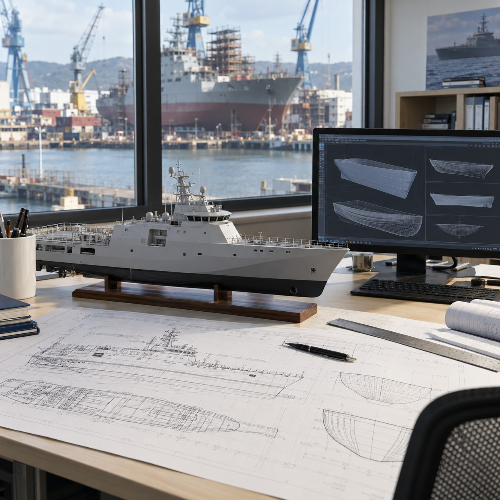
A07 – Feasibility to Preliminary Naval Ship Design
This course structure guides learners through the feasibility-to-preliminary design process used in naval architecture, based on real course policy statements, weekly schedules, grading checklists, and authentic student design projects. It connects mission definition, parametric analysis, hydrostatics, stability, structures, and professional deliverables into a coherent design workflow.
£299.00
1 hour 30 minutes
Focused, self-paced learning designed to fit around professional schedules.
Online, self-paced
Study online at a pace that fits your schedule.
7 sections
Structured curriculum sections.
English
Language of instruction for this course.
Quiz count: 5 total
Knowledge checks and assessed activities.
24 lessons
Focused lessons organised into a clear learning path.
Course overview
This course structure guides learners through the feasibility-to-preliminary design process used in naval architecture, based on real course policy statements, weekly schedules, grading checklists, and authentic student design projects. It connects mission definition, parametric analysis, hydrostatics, stability, structures, and professional deliverables into a coherent design workflow.
What you will learn
Explain the role of feasibility and preliminary design within the naval ship design process.
Develop a mission statement and parametric basis for a new vessel concept.
Interpret principal dimensions, hydrostatics, and weight data to assess design reasonableness.
Evaluate stability and structural design decisions against naval-architecture criteria.
Organize a professional design submission using authentic naval architecture deliverables and review standards.
Skills and knowledge
Naval architecture
Ship design
Mission analysis
Hydrostatics
Stability
Structures
Design review
Course curriculum
Introduction
1.1 Welcome
Design Sequence and Deliverables
2.1 Why the Sequence Exists
2.2 Individual and Team Briefs
2.3 Assessment and Awards
2.4 Quiz 1 (quiz)
Mission and Parametrics
3.1 Mission Statements in Practice
3.2 Building Design Lanes
3.3 Comparing Isis and Rosamunda
3.4 Mission Statement Exercise
3.5 Quiz 2 (quiz)
Dimensions and Hydrostatics
4.1 Reading Principal Dimensions
4.2 Weights and Centers
4.3 Hydrostatic Reasonableness Checks
4.4 Data Debugging Exercise
4.5 Quiz 3 (quiz)
Stability Assessment
5.1 Reading the GZ Curve
5.2 Cross Curves and Mismatches
5.3 Dynamic Stability and Section Area
5.4 Quiz 4 (quiz)
Structures and Materials
6.1 Rule-Based Scantlings
6.2 Longitudinal Strength Logic
6.3 Professional Design Judgments
6.4 Quiz 5 (quiz)
Summary
7.1 Key Takeaways
Ready to enrol?
£299.00