
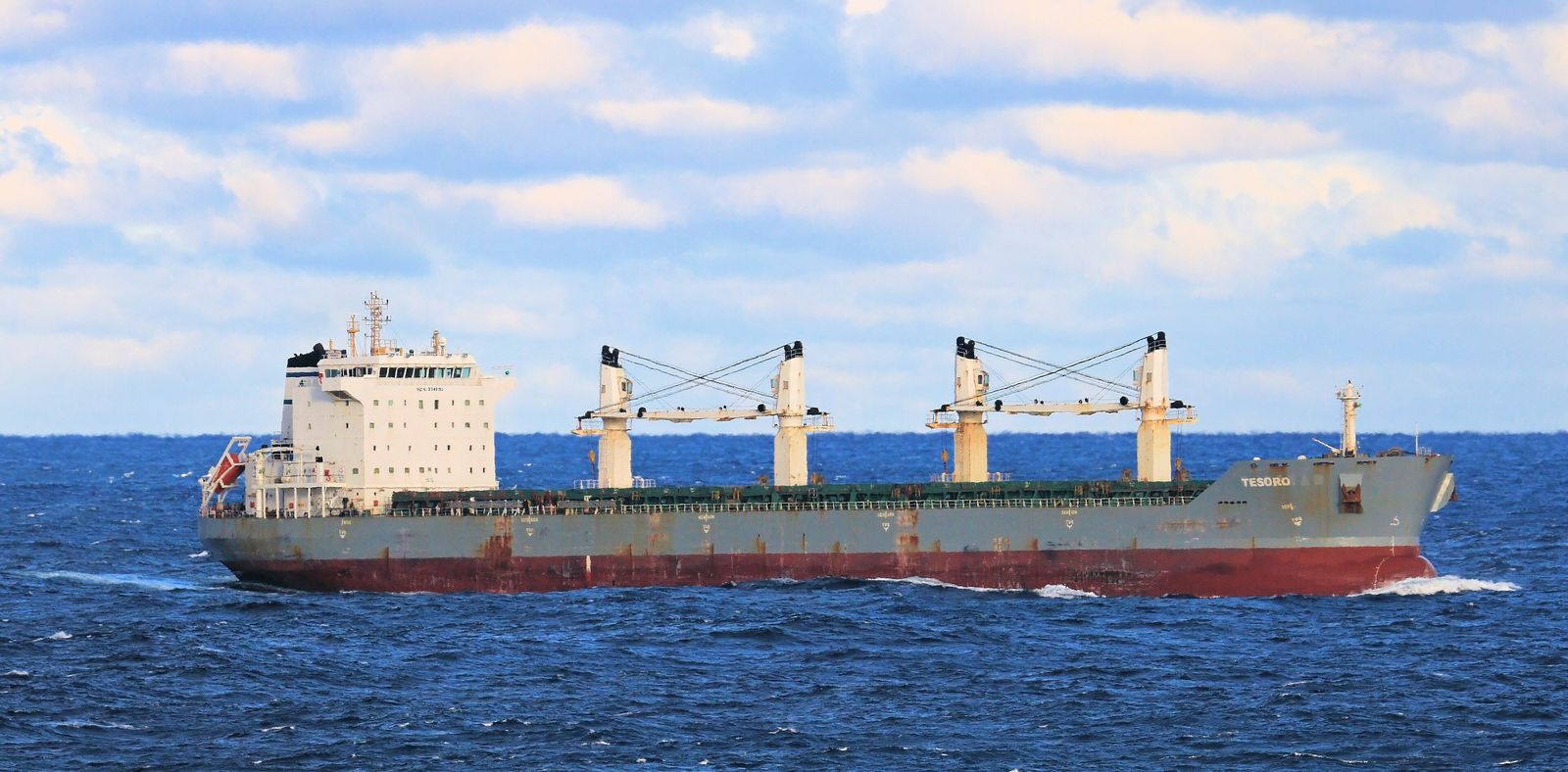
International conventions are not paperwork added at the end of a design; they shape a ship’s subdivision, fire protection, life-saving equipment, tanks, machinery and navigation systems from the start. This second part of the Naval Architecture and Ship Production Technology series explains how the major conventions translate into design requirements and how those requirements differ between the main merchant ship types. It covers SOLAS subdivision and probabilistic damage stability, fire protection and life-saving arrangements, the MARPOL annexes, ballast water rules and COLREG equipment, and then compares container ships, bulk carriers, RoRo ships and tankers, including lessons learned from major casualties. The course closes with hull-form classification, systematic series and benchmark hulls, and the principles of bulbous bow design.
Course at a glance: Duration 20 hours · Self-paced online · 7 sections, 27 lessons, a 93-page downloadable course book
What you will learn
- Explain how SOLAS requirements shape subdivision, fire protection and life-saving arrangements.
- Describe the logic of probabilistic damage stability and the attained and required subdivision indices.
- Differentiate the main pollution-prevention rules in the MARPOL annexes and the Ballast Water Management Convention.
- Identify COLREG navigation light and equipment requirements and other conventions that affect design.
- Compare the design features and operating constraints of container ships, bulk carriers, RoRo ships and tankers.
- Interpret how major maritime casualties have influenced later structural and stability rules.
- Apply hull-form classification and bulbous bow concepts to evaluate design trade-offs.

Inside the course: a high-level summary, section by section.
SOLAS: subdivision, fire and life-saving
The course opens with the International Convention for the Safety of Life at Sea and its direct influence on ship arrangement. Subdivision and stability rules determine how a hull is divided by watertight bulkheads and decks so that it can survive flooding. The course explains the shift from deterministic rules to probabilistic damage stability, in which an attained subdivision index is found by summing, over many possible damage cases, the probability that a given compartment or group of compartments is flooded multiplied by the probability that the ship survives that flooding. The attained index must be at least equal to a required index that depends on ship type, length and the number of people on board. This approach rewards arrangements that are robust across many damage scenarios rather than just a few prescribed ones.
Fire protection is explained through the classification of structural divisions. Class A divisions, built of steel or equivalent, must resist the passage of smoke and flame for a set period and are rated by how long they limit temperature rise; Class B divisions offer a lower level of fire integrity; and Class C divisions are non-combustible with no fire-integrity requirement. Life-saving arrangements, including lifeboats, liferafts, lifejackets and immersion suits for cold-water areas, are presented in terms of whether the whole system can actually evacuate everyone on board within the required performance standards.
MARPOL, ballast water, COLREG and other conventions
The MARPOL annexes address different pollution problems, from oil and noxious liquid substances to sewage, garbage and air emissions, so each requires different technical solutions. The course shows how they shape tank arrangements, machinery spaces, treatment plants and propulsion systems. Ballast water rules, designed to limit the spread of invasive species, add treatment systems and operating constraints. COLREG introduces the navigation lights and signalling equipment that let other vessels interpret a ship’s position, heading and status, with masthead lights, sidelights and sternlight each covering defined arcs.
Conventions outside the core IMO set also matter. Standardised manifold arrangements for tankers, for example, help ships interface with terminal equipment worldwide. The key habit the course encourages is to ask not only whether a design is compliant, but whether it will work in the real operating environment.
Container ships and bulk carriers
Container ship development is traced from early conversions to modern large cellular designs. Standardised container sizes drive the whole system: ship, port and land transport. Identification codes allow each container to be tracked, securing devices keep stacks stable at sea, and hatch cover designs balance cargo access with safety and weather protection.
Bulk carriers are explained through two linked ideas: size class tells you where a ship can trade, and structural notation tells you how it can be loaded safely. Size classes from Handysize upwards reflect canal, strait and port limits. The course discusses the loading and structural risks specific to bulk cargoes and uses the loss of the Derbyshire to show how extreme weather, local structural weakness and hatch-cover integrity can combine, and how that casualty influenced later structural and hatch-cover requirements.


RoRo ships and tankers
RoRo ships are organised around vehicle decks, ramps and circulation paths, and the central design question is the mix of cargo and passengers the ship must serve. The course explains the different RoRo types and why large open vehicle decks make these ships vulnerable to water on deck after damage, drawing lessons from major RoRo casualties. Cargo securing is treated as a mechanics problem: wheeled units on a moving deck experience accelerations that must be resisted by lashings.
Tankers are discussed in terms of size, cargo quality and handling needs. Safety rules emphasise spill prevention and the ability to be towed in an emergency, and cargo-handling systems, inert gas and tank arrangement are key design topics.
Hull form and bulbous bows
The final section turns to the hull itself. Hull forms are classified by their fullness and proportions, and systematic series and benchmark hulls give designers reference data for resistance and performance. Bulbous bow principles explain how a correctly shaped and positioned bulb generates its own wave system that interferes with the bow wave, reducing wave-making resistance at the design speed. Design coefficients describing bulb length, breadth, height and area help designers size a bulb and understand why a bulb that suits one speed and draught may be less effective at others.
Why this matters in practice
Regulatory requirements fix many of a ship’s most expensive features: the number and position of watertight bulkheads, the extent of fire insulation, the size of lifeboat and liferaft installations, the arrangement of fuel and ballast tanks and the treatment systems carried on board. When these requirements are understood early, they can be built into an efficient arrangement; when they are discovered late, they force costly redesign. Equally, understanding why each ship type is arranged as it is, and which casualties prompted particular rules, helps engineers judge proposed design changes, review drawings with confidence and explain requirements to owners and builders. That combination of regulatory literacy and ship-type knowledge is the foundation for the preliminary design methods covered in Part 3 of the series.
Key takeaways
You leave with a clear picture of how international conventions shape the arrangement and equipment of merchant ships, how those rules play out differently for container ships, bulk carriers, RoRo ships and tankers, and how hull form and bulbous bow design support efficient performance.
How you study
The course is delivered fully online and is self-paced, so you can fit roughly 20 hours of study around professional commitments. Lessons combine clear explanation with examples, diagrams and short interactive checks, and the main sections end with graded quizzes (5 in total) so you can confirm you can apply each method before moving on. A 93-page course book can be downloaded and printed for offline reading and later reference.
Course contents
- SOLAS Safety Requirements: Subdivision and Stability; Probabilistic Damage Stability; Fire Protection Systems; Life-Saving Arrangements
- Pollution and Navigation Rules: MARPOL Annexes; Ballast Water and Related Rules; COLREG Equipment Requirements; Other Design Conventions
- Container and Bulk Carriers: Container Ship Development; Container Equipment and Security; Bulk Carrier Design Basis; Casualty and Loading Implications; Ship-Type Comparison Task
- RoRo Ships and Tankers: RoRo Ship Types; RoRo Casualties and Stability; Securing and Tanker Systems
- Hull Form and Bulbous Bow: Hull Form Classification; Series and Benchmark Hulls; Bulbous Bow Principles; Bulb Design Coefficients
- Summary: Key Takeaways
Who this course is for
This course is for engineering graduates and practising engineers who need a refresher on how international maritime regulation shapes ship design, including naval architects, marine engineers, superintendents, surveyors and engineers moving into shipbuilding or ship operations. It is the second of a four-part series and can be taken on its own or alongside the other parts.
Frequently asked questions
How long does Naval Architecture and Ship Production Technology (Part 2 of 4) take?
The course is designed for about 20 hours of study. It is self-paced and fully online, so you can spread it over a few weeks or complete it more quickly.
What is covered?
The course is organised into 7 sections with 27 lessons, moving from foundations to applied methods, as summarised above.
Is there material to keep after the course?
Yes. A downloadable 93-page course book accompanies the lessons for offline reading and later reference.
How is progress checked?
Each main section closes with a graded quiz (5 in total). The quizzes test understanding of the concepts and methods explained in the lessons rather than memorisation, and you can review the relevant lessons before attempting them.
Can I record this study for my own professional development?
Yes. The course notebook includes a self-assessment of the course objectives before and after study, a reflection page and a learning log, which you can use to keep your own record of professional development.
Duration: 20 hours
Related courses: A10 – Naval Architecture and Ship Production Technology (Part 1 of 4); A12 – Naval Architecture and Ship Production Technology (Part 3 of 4); A13 – Naval Architecture and Ship Production Technology (Part 4 of 4); A16 – Advanced Hydrodynamics for Ship-Yacht Design
Enrol
Study at your own pace and work through the full course material, worked examples and section quizzes. Enrol in A11 – Naval Architecture and Ship Production Technology (Part 2 of 4) →
Recent Comments