
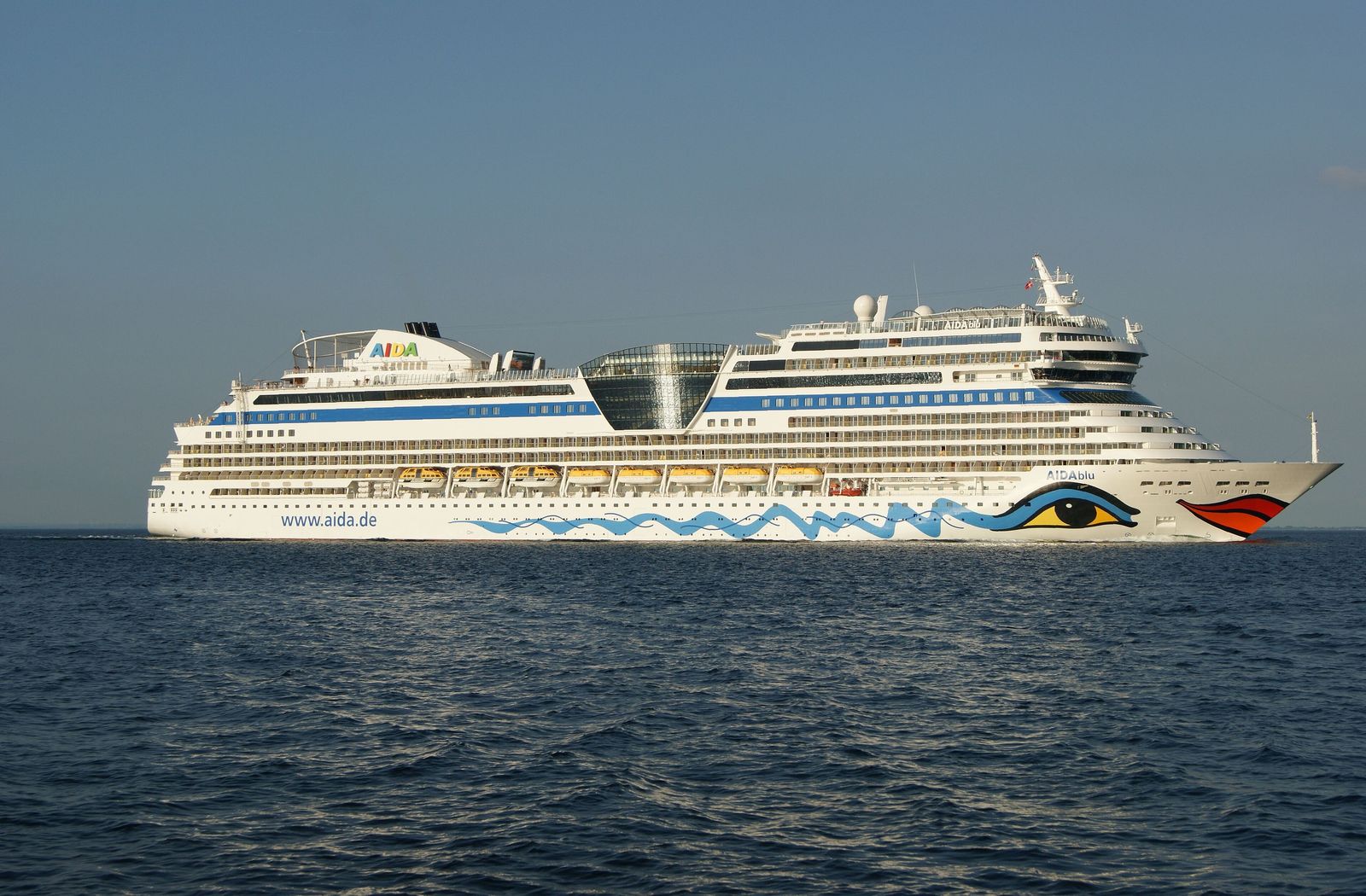
Vibration and noise affect a ship’s structural integrity, the reliability of its machinery and the comfort and health of everyone on board. This course connects vibration theory to the real behaviour of ships. It starts with single-degree-of-freedom models and resonance, estimates natural frequencies of beams and deck panels with Rayleigh’s method, and shows how the surrounding water adds mass and damping to wetted structures. It then examines whirl and torsional vibration in propeller-shaft systems, local and deckhouse modes, and the propeller and cavitation forces that excite the hull. The second half turns to sound: decibels and frequency bands, noise-rating curves and A-weighting, transmission paths, resilient mounts and a structured workflow for predicting noise at a receiver location. Worked maritime examples tie each method to the design decisions engineers face.
Course at a glance: Duration 20 hours · Self-paced online · 10 sections, 35 lessons, a 137-page downloadable course book
What you will learn
- Set up and solve single-degree-of-freedom vibration models for mass-spring-damper systems found on ships.
- Estimate the lowest natural frequency of beams and deck panels using Rayleigh’s method, and understand its limitations.
- Explain how added mass and damping from surrounding water lower the natural frequencies of wetted structures.
- Evaluate whirl and torsional-vibration risks in propeller-shaft systems against operating-speed excitation.
- Identify propeller-hull excitation and cavitation as sources of vibration and noise, and outline control measures.
- Apply decibels, frequency bands, NR curves and dB(A) to interpret shipboard noise data.
- Predict noise at a receiver location by following source, path and transmission loss.

Inside the course: a high-level summary, section by section.
Single-degree-of-freedom vibration models
The course begins with the simplest model that captures the essentials: a mass, a spring and a damper. Writing the equation of motion for this system and solving it under harmonic forcing reveals the behaviour that underpins all of vibration engineering. Below the natural frequency the response is stiffness-controlled and moves in phase with the force; above it the response is mass-controlled and moves in anti-phase; and near the natural frequency the amplitude grows sharply, limited only by damping. The course uses these results to explain why design frequency limits are set to keep excitation away from resonance, and then moves from idealised models to real structures, where damping arises from materials, joints and the surrounding fluid and is often uncertain.
Beams, panels and Rayleigh’s method
Many shipboard vibration problems involve beam-like or plate-like structures, such as girders, decks and masts. The uniform beam equation provides their exact natural frequencies in simple cases, but practical structures rarely fit those cases. Rayleigh’s method offers a powerful estimate: assume a reasonable deflected shape, use its kinetic energy to define an equivalent mass and its strain energy to define an equivalent stiffness, and combine them in the single-degree-of-freedom relation. Because the assumed shape is approximate, the estimate is always an upper bound on the true lowest frequency. A practicum-style beam estimate and an extension to deck panels show how the method is applied, and the course compares Euler and Timoshenko beam theories, explaining why the classical model over-predicts frequencies for higher modes where shear deformation and rotary inertia become important.
Added mass and hydrodynamic effects
A structure vibrating in water must accelerate the water around it, which behaves as additional mass. The course explains what added mass means physically and why it can be large: for rudders and other submerged appendages, the added mass can be many times the structure’s own mass. Comparing a beam tested in air with the same beam tested in water shows the natural frequency falling as it becomes wet. The section applies this to ship structures in water, to the frequency shift of wetted beams and to the hydrodynamics of a vibrating pontoon, and highlights why added mass matters directly in shaft whirl and torsional-vibration calculations.
Shaft dynamics and drivetrain design
Propulsion shafting is one of the most important vibration systems on a ship. The course shows that whirl is not a mysterious separate phenomenon but the lateral vibration of a rotating shaft, modified by rotation and by the gyroscopic inertia of the propeller. Once these effects are included, the bending response splits into forward and backward whirl branches, and a whirl diagram is used to compare natural frequencies with excitation across the operating speed range.
Torsional vibration is treated through reduced models. A complex drivetrain of engine, couplings, gearbox, shaft and propeller is represented by a small number of equivalent inertias connected by torsional stiffnesses, from which the first natural frequency can be estimated and checked against operating-speed excitation. Design cases, including a large container-ship drivetrain, explore when a system can be split into independent sub-systems and which modelling assumptions are reasonable. A mitigation lesson reviews the options available when a resonance is found, such as changing stiffness or inertia, adding dampers or adjusting the operating range.


Local modes, modal analysis and excitation
The perspective then widens from single components to the ship as a connected system. Local structures, such as deck panels, masts and deckhouses, can vibrate because of their own properties and because of their connection to the hull girder. Modal analysis tools, including finite element methods and measurement-based techniques, help identify these modes. The principal source of excitation on most ships is the propeller: pressure pulses from blades passing through the non-uniform wake create forces at blade-rate frequencies that are transmitted into the hull and shafting. Cavitation adds both vibration and broadband and tonal noise, and the course outlines how propeller design and wake improvements help control it.
Sound assessment
The noise part of the course starts with the decibel scale, sound pressure level and frequency bands, including octave and third-octave analysis, and explains how levels from several sources are combined. Noise-rating curves and A-weighting are then introduced as the main ways of judging whether a spectrum is acceptable for a given space. A key insight is that two spaces with the same overall level can have very different noise profiles, and that the shape of the spectrum, particularly strong low-frequency or tonal content, often determines comfort and the best remedy.
Shipboard noise prediction and control
The final technical section builds a practical prediction workflow. Every noise problem is separated into source, path and receiver. Airborne and structure-borne paths are identified, each is assigned an appropriate build-up of transmission loss, and the contributions are combined at the receiver. Resilient mounts are explained as a means of isolating machinery from the structure, with the reminder that an effective fix for airborne noise may do little for structure-borne vibration, and vice versa. The aim is not simply a lower number but a better noise profile for the people on board.
Why this matters in practice
Vibration and noise problems are far cheaper to prevent at the design stage than to fix after delivery. A deck panel whose natural frequency sits close to blade-rate excitation, a shaft line with a torsional mode inside the operating speed range, or an accommodation block sharing a structural path with a diesel generator can each lead to complaints, fatigue damage or costly retrofits. The methods in this course give engineers a way to screen designs early, using simple models to identify risk before committing to detailed finite element or acoustic analysis, and to understand the outputs of those detailed analyses when they arrive. They are equally useful in service, where structured thinking about source, path and receiver helps engineers diagnose problems and choose a fix that addresses the real cause rather than the symptom.
Key takeaways
You finish with an integrated toolkit for ship vibration and noise: from the physics of resonance and natural frequency estimation, through hydrodynamic and shaft effects, to the measurement, assessment and prediction of shipboard noise.
How you study
The course is delivered fully online and is self-paced, so you can fit roughly 20 hours of study around professional commitments. Lessons combine clear explanation with examples, diagrams and short interactive checks, and the main sections end with graded quizzes (8 in total) so you can confirm you can apply each method before moving on. A 137-page course book can be downloaded and printed for offline reading and later reference.
Course contents
- SDOF Vibration Models: Equation of Motion; Resonance and Frequency Limits; Real Structures and Damping
- Beam Vibration and Rayleigh: Uniform Beam Equation; Using Rayleigh’s Method; Practicum Beam Estimate; Deck Panels and Model Limits
- Added Mass in Water: What Added Mass Means; Ship Structures in Water; Wet-Beam Frequency Shift; Pontoon Hydrodynamics
- Shaft Whirl and Torsion: Whirl in Rotating Shafts; Reading the Whirl Diagram; Torsional Reduced Models; Drivetrain Design Cases; Mitigation Strategies
- Superstructure and Modal Behavior: Local and Deckhouse Modes; Modal Analysis Tools
- Propeller Excitation and Cavitation: Propeller-Hull Excitation; Cavitation Noise Control
- Sound Fundamentals and Rating: Decibels and Frequency Bands; NR Curves and A-Weighting
- Transmission and Noise Prediction: Transmission Paths; Resilient Mount Isolation; Noise Prediction Workflow
- Summary: Key Takeaways
Who this course is for
This course suits engineering graduates and practising engineers working in naval architecture, marine engineering, ship design or ship operations who need a structured refresher in vibration and noise, as well as mechanical engineers moving into the marine sector. It is particularly useful for engineers involved in machinery installation, propulsion design, accommodation comfort or troubleshooting vibration complaints in service. A background in dynamics and basic differential equations is helpful.
Frequently asked questions
How long does Ship Vibration and Noise take?
The course is designed for about 20 hours of study. It is self-paced and fully online, so you can spread it over a few weeks or complete it more quickly.
What is covered?
The course is organised into 10 sections with 35 lessons, moving from foundations to applied methods, as summarised above.
Is there material to keep after the course?
Yes. A downloadable 137-page course book accompanies the lessons for offline reading and later reference.
How is progress checked?
Each main section closes with a graded quiz (8 in total). The quizzes test understanding of the concepts and methods explained in the lessons rather than memorisation, and you can review the relevant lessons before attempting them.
Can I record this study for my own professional development?
Yes. The course notebook includes a self-assessment of the course objectives before and after study, a reflection page and a learning log, which you can use to keep your own record of professional development.
Duration: 20 hours
Related courses: B10 – Onboard Noise and Vibration; B07 – Propeller-Engine Matching & Ship Resistance; A05 – Ship Structural Analysis Fundamentals; C06 – FEM Masterclass for Ship Structures
Enrol
Study at your own pace and work through the full course material, worked examples and section quizzes. Enrol in A06 – Ship Vibration and Noise →
Recent Comments