
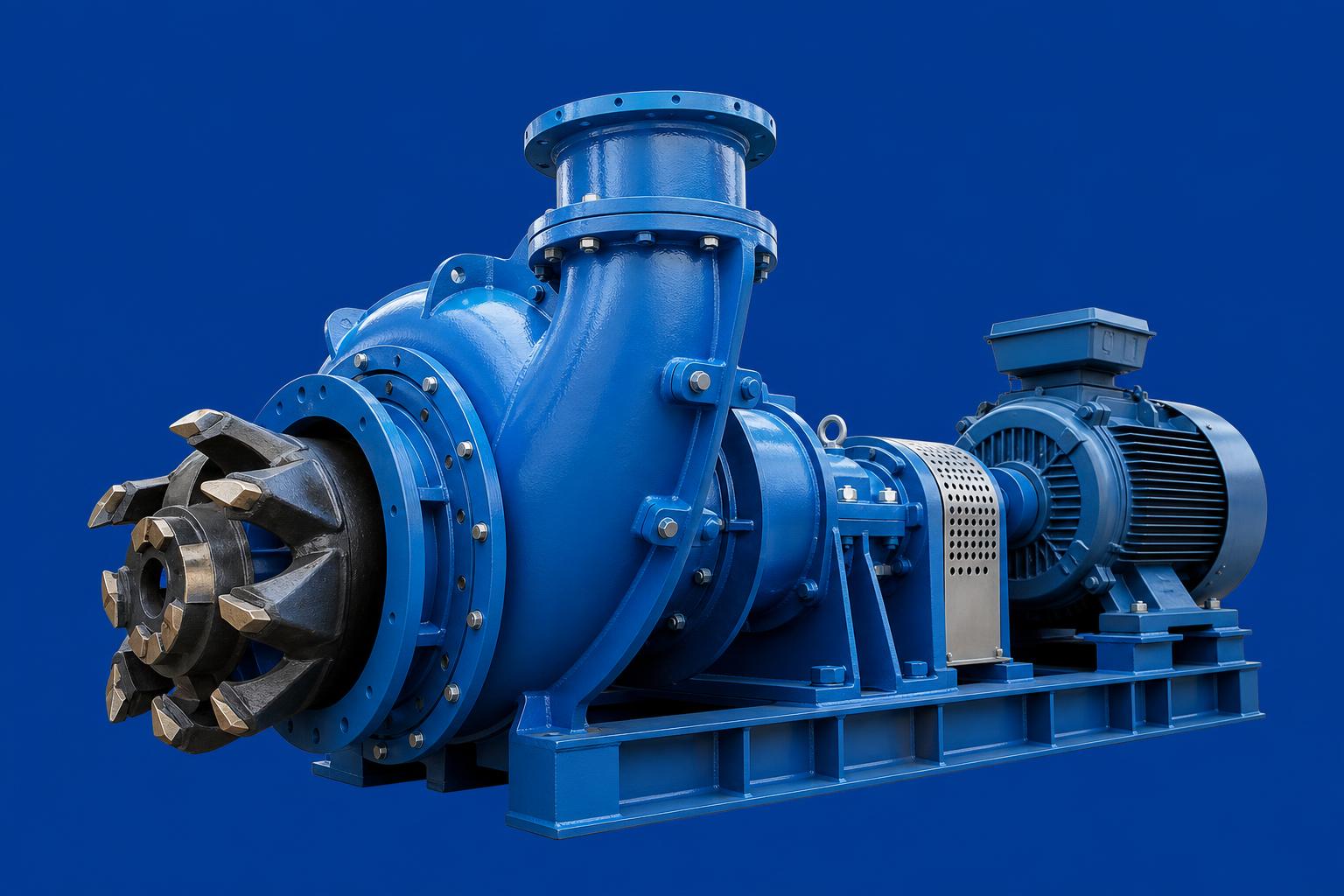
E02 – Dredge Pumps, Hydraulic Transport & Cutting Mechanics
This course develops the mid-level technical foundations of dredging mechanics: how soil and rock are cut, how slurry is pumped and transported, and how pump-pipeline systems are selected and operated in practice. It bridges basic dredger familiarity and advanced equipment design by focusing on the physical processes inside dredging operations.
£299.00
1 hour 30 minutes
Focused, self-paced learning designed to fit around professional schedules.
Online, self-paced
Study online at a pace that fits your schedule.
7 sections
Structured curriculum sections.
English
Language of instruction for this course.
Quiz count: 5 total
Knowledge checks and assessed activities.
36 lessons
Focused lessons organised into a clear learning path.
Course overview
This course develops the mid-level technical foundations of dredging mechanics: how soil and rock are cut, how slurry is pumped and transported, and how pump-pipeline systems are selected and operated in practice. It bridges basic dredger familiarity and advanced equipment design by focusing on the physical processes inside dredging operations.
What you will learn
Explain how pore pressure, dilatancy and cavitation influence soil and rock cutting resistance.
Distinguish major cutting and failure mechanisms and relate them to material type, geometry and operating conditions.
Describe the breaching process and predict how suction-mouth movement affects sand production.
Explain how centrifugal pump theory leads to real dredge-pump characteristics and operating constraints.
Compare slurry transport models and interpret deposition-limit velocity, concentration measures and settling behaviour.
Evaluate pump-pipeline operating conditions against production, cavitation and practical equipment criteria.
Skills and knowledge
Cutting mechanics
Breaching
Dredge pumps
Slurry transport
Pump selection
Cavitation
Pipeline systems
Settling velocity
Course curriculum
Introduction
1.1 Welcome
Soil and Rock Cutting
2.1 Soil Response to Cutting
2.2 Storage Equation Basics
2.3 Bulldozer Effect Wedge
2.4 Cutting Failure Mechanisms
2.5 Rock Strength and Failure
2.6 Hyperbaric Rock Cutting
2.7 Section 1 Quiz (quiz)
The Breaching Process
3.1 Breaching Fundamentals
3.2 Permeability and Sand State
3.3 Wall Velocity and Flow
3.4 Suction-Mouth Movement Patterns
3.5 Optimum Mixture Velocity
3.6 Section 2 Quiz (quiz)
Dredge Pump Theory
4.1 Why Dredge Pumps Differ
4.2 Euler Equation in Context
4.3 Slip and Real Losses
4.4 Affinity Laws and Specific Speed
4.5 Drivers and Operating Behaviour
4.6 Cavitation and NPSH
4.7 Solids Effects on Performance
4.8 Section 3 Quiz (quiz)
Slurry Transport
5.1 Flow Regimes in Pipelines
5.2 Deposition-Limit Velocity
5.3 Concentration Measures
5.4 Empirical Transport Correlations
5.5 The Two-Layer Model
5.6 Settling Velocity Foundations
5.7 Section 4 Quiz (quiz)
Pump-Pipeline Systems
6.1 System Curves and Operating Point
6.2 Selecting the Pump Duty
6.3 Pipeline Length and Boosters
6.4 Turning Glands and Seals
6.5 System Selection Assignment
6.6 Summary Quiz (quiz)
Summary
7.1 Key Takeaways
Ready to enrol?
£299.00