
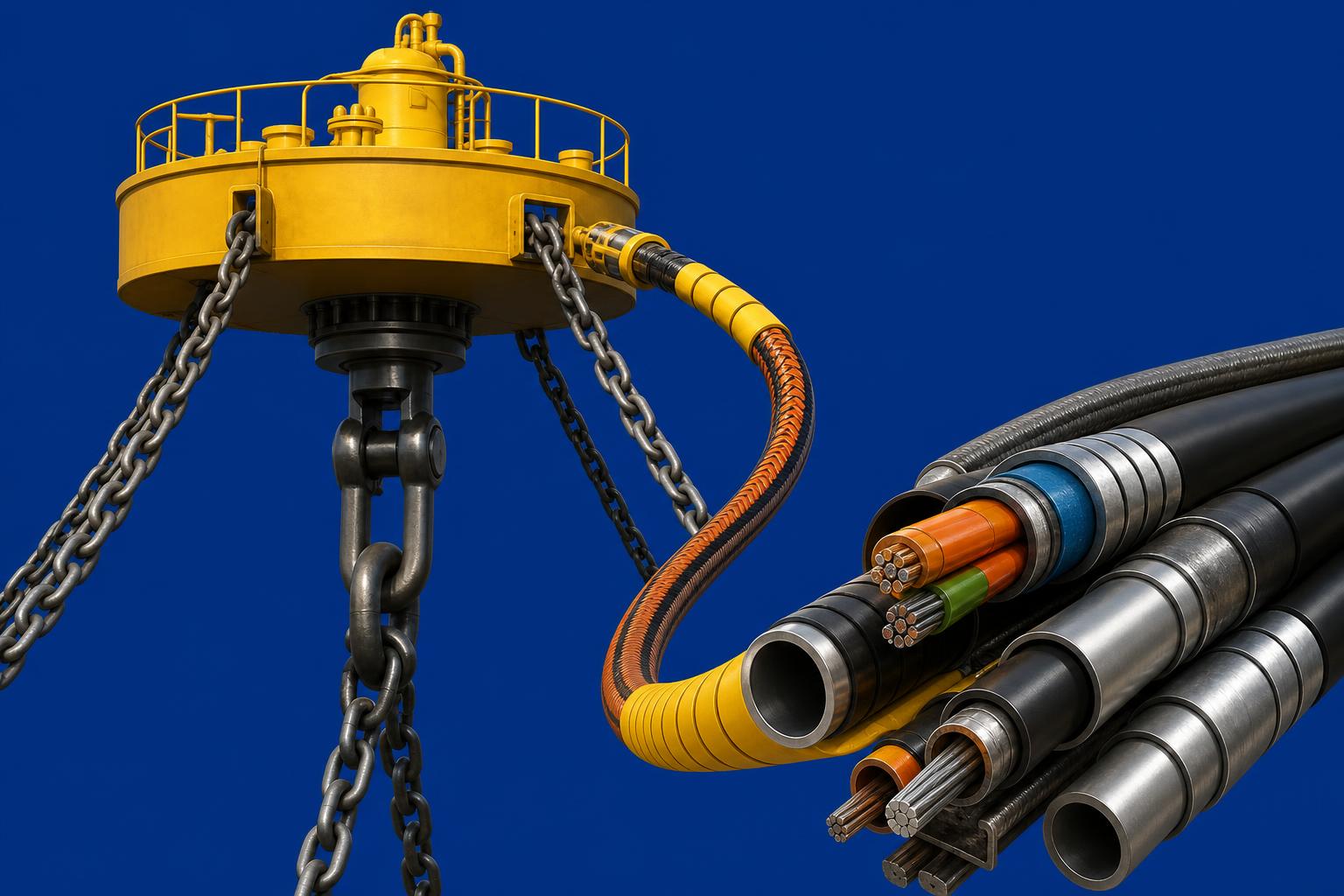
D15 – Pipelines, Moorings, Umbilicals and Risers
This course covers static catenary analysis for subsea engineering systems. It develops the static analysis methods needed for pipelines, moorings, umbilicals and risers, and closes with applied problem-solving and a CALM buoy feasibility design task.
£299.00
1 hour 30 minutes
Focused, self-paced learning designed to fit around professional schedules.
Online, self-paced
Study online at a pace that fits your schedule.
8 sections
Structured curriculum sections.
English
Language of instruction for this course.
Quiz count: 6 total
Knowledge checks and assessed activities.
29 lessons
Focused lessons organised into a clear learning path.
Course overview
This course covers static catenary analysis for subsea engineering systems. It develops the static analysis methods needed for pipelines, moorings, umbilicals and risers, and closes with applied problem-solving and a CALM buoy feasibility design task.
What you will learn
Classify subsea line problems by catenary assumption, current regime and governing load case.
Apply weight-only catenary equations to calculate geometry, tension and curvature limits for mooring and pipe-lay problems.
Analyse drag-only and combined-force catenaries using two-point relations and Pode’s cable-function method.
Calculate surge and heave effects at the catenary top end and use the equations sheet as a design aid.
Evaluate which static catenary method best fits a range of subsea engineering scenarios.
Scope a preliminary CALM buoy mooring and flexible-riser feasibility design from a technical brief.
Skills and knowledge
Catenary analysis
Mooring design
Pipeline laying
Flexible risers
Umbilicals
Static equilibrium
CALM buoy
Course curriculum
Introduction
1.1 Welcome
Introduction to Catenary Systems
2.1 Catenary System Basics
2.2 Why the Methods Matter
2.3 Section 1 Quiz (quiz)
Weight-Only Catenary Analysis
3.1 Elemental Equilibrium
3.2 Geometry and Tension
3.3 Curvature and Pipe Limits
3.4 Worked Case I Examples
3.5 Section 2 Quiz (quiz)
Drag-Only and Combined-Force Catenaries
4.1 Drag-Only Formulation
4.2 Neutrally Buoyant Example
4.3 Pode’s Cable Functions
4.4 Using Pode’s Tables
4.5 Section 3 Quiz (quiz)
Surge, Heave and the Equations Sheet
5.1 Surge and Heave Relations
5.2 Design Chart Method
5.3 Using the Equations Sheet
5.4 Section 4 Quiz (quiz)
Applied Tutorial Problems
6.1 Flexible Riser and Buoy
6.2 Pipeline and Spread Mooring
6.3 Umbilical and Transponder Cases
6.4 Tutorial Problem-Solving Strategy
6.5 Section 5 Quiz (quiz)
CALM Buoy Design Exercise
7.1 Design Brief and Constraints
7.2 Concept Selection
7.3 Feasibility Design Logic
7.4 CALM Buoy Feasibility Task
7.5 Section 6 Quiz (quiz)
Summary
8.1 Key Takeaways
Ready to enrol?
£299.00