
D13 – Arctic Offshore Engineering Part 3 Fieldwork
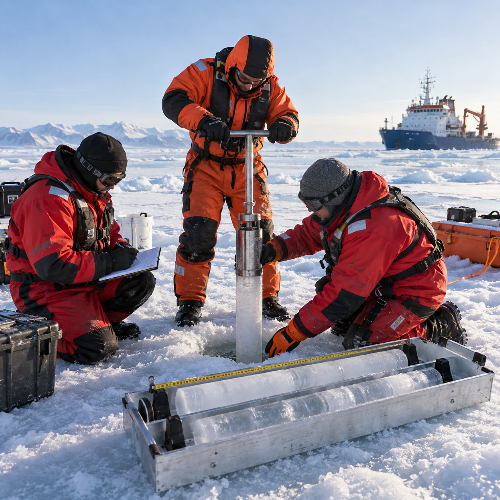
A graduate-level field methods course in Arctic offshore engineering using sea-ice field reports and datasets from Svalbard. The course synthesizes sea-ice field logistics, polygon-based measurements, ice-property testing, and load-related field exercises into a structured technical sequence for advanced learners.
£299.00
1 hour 22 minutes
Focused, self-paced learning designed to fit around professional schedules.
Online, self-paced
Study online at a pace that fits your schedule.
9 sections
Structured curriculum sections.
English
Language of instruction for this course.
28 lessons
Focused lessons organised into a clear learning path.
Course overview
A graduate-level field methods course in Arctic offshore engineering using sea-ice field reports and datasets from Svalbard. The course synthesizes sea-ice field logistics, polygon-based measurements, ice-property testing, and load-related field exercises into a structured technical sequence for advanced learners.
What you will learn
Evaluate Arctic field-site logistics, hazards, and HSE controls for a sea-ice engineering campaign in Svalbard.
Apply polygon-based sampling and georeferencing methods to plan and interpret distributed sea-ice measurements.
Interpret snow depth, freeboard, ice thickness, temperature, salinity, density, and porosity data from field cores using the reported physical relationships and formulations.
Analyse mechanical test results to explain anisotropy, failure mode differences, and uncertainty in sea-ice strength measurements.
Assess how field observations of sea ice and pile accretion inform engineering judgement about ice loads on offshore and coastal structures.
Skills and knowledge
Arctic fieldwork
Sea ice measurements
Ice mechanics
Offshore loads
Svalbard
Data quality
Course curriculum
Introduction
1.1 Welcome
Field Context and HSE
2.1 Arctic Sea-Ice Fieldwork
2.2 Svalbard Field Site
2.3 Arctic Hazards
2.4 Fieldwork Sequence
Polygon Survey Methods
3.1 Why the Trio Matters
3.2 Polygon Design
3.3 Measurement Workflow
3.4 Survey Results
Ice-Core Physical Properties
4.1 STD Core Workflow
4.2 Temperature Profiles
4.3 Salinity and Density
4.4 Porosity Formulations
4.5 Property Data Quality
Compression Testing
5.1 Kompis Test Setup
5.2 Strength Anisotropy
5.3 Failure Behaviour
5.4 Modulus and Scatter
Friction and Ridge Mechanics
6.1 Friction Test Purpose
6.2 Field Test Procedure
6.3 Uncertainty in Friction
Ice Loads at Kapp Amsterdam
7.1 Quay Ice Setting
7.2 Bustle Measurements
7.3 From Field Data to Loads
Monitoring and Recommendations
8.1 Repeated Fjord Surveys
8.2 Measurement Uncertainty
8.3 Method Improvements
Summary
9.1 Key Takeaways
Ready to enrol?
£299.00