
B06 – Resistance & Propulsion
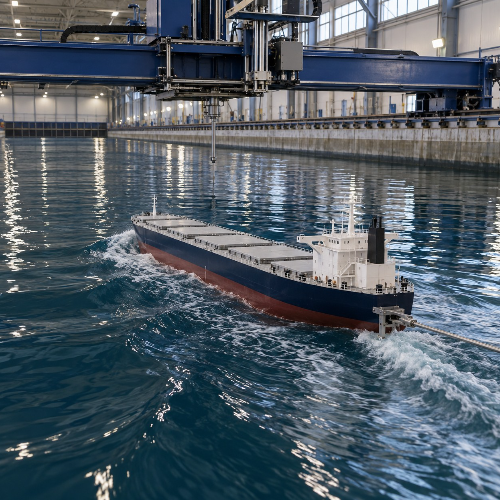
This course aims to show how naval architects estimate ship resistance, convert resistance into power requirements and relate installed power to propeller-generated thrust, moving from drive-train power definitions through resistance analysis and model testing to core screw-propeller concepts.
£299.00
20 hours
Focused, self-paced learning designed to fit around professional schedules.
Online, self-paced
Study online at a pace that fits your schedule.
7 sections
Structured curriculum sections.
English
Language of instruction for this course.
23 lessons
Focused lessons organised into a clear learning path.
Course overview
Designed for: engineering graduates looking for refresher courses in niche expert areas.
Entry requirements: an engineering degree or equivalent experience, plus basic engineering mechanics and fluid mechanics (pressure, velocity, Reynolds number).
Learning format: self-paced online lessons with audio read-out, worked examples (drive train, EHP to SHP, model-to-ship scaling), interactive tabs and flip cards, in-lesson checks, an AI tutor to answer questions as you go, and graded quizzes. This suits the aim because each power definition is used straight away in a worked example, which suits a foundation course building toward powering calculations.
What you will learn
Explain how power is transmitted from a ship’s prime mover to the propeller and distinguish BHP, SHP, DHP, THP, and EHP.
Calculate delivered or installed power from stated efficiencies and operating requirements.
Interpret the main components of hull resistance and how they change with speed, flow regime, and operating conditions.
Apply similarity principles and Froude scaling to relate towing-tank model results to full-scale EHP predictions.
Explain how screw-propeller geometry and operating phenomena influence thrust and propulsion performance.
Skills and knowledge
Ship resistance
EHP
Propulsive efficiency
Towing-tank testing
Propeller theory
Naval architecture
Course curriculum
Introduction
1.1 Welcome
Drive Train Power Chain
2.1 Why Power Matters
2.2 BHP to THP
2.3 Drive Train Worked Example
2.4 Quiz 1
EHP and Propulsive Efficiency
3.1 What EHP Means
3.2 From EHP to SHP
3.3 EHP to SHP Worked Example
3.4 Quiz 2
Hull Resistance Components
4.1 Total Resistance
4.2 Viscous Flow Around Hulls
4.3 Wave-Making Effects
4.4 Operating Resistance Factors
4.5 Quiz 3
Model Testing and Scaling
5.1 Why Use Models
5.2 Similarity and Froude Law
5.3 From Tank to EHP Curve
5.4 Model-to-Ship Scaling Worked Example
5.5 Quiz 4
Screw Propeller Fundamentals
6.1 Propeller Geometry
6.2 Thrust and Performance
6.3 Quiz 5
Summary
7.1 Key Takeaways
Ready to enrol?
£299.00