
B02 – Marine Engineering 1
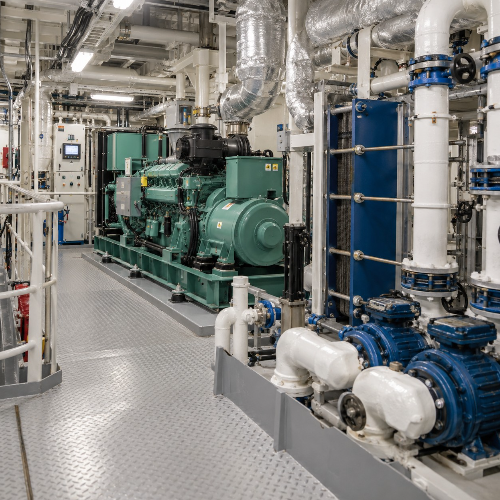
This course aims to introduce marine engineering from ship mission and power demand through thermodynamics and propulsion architectures to diesel engine fundamentals and performance, so you can follow and check the basic calculations behind a ship's machinery.
£299.00
20 hours
Focused, self-paced learning designed to fit around professional schedules.
Online, self-paced
Study online at a pace that fits your schedule.
6 sections
Structured curriculum sections.
English
Language of instruction for this course.
25 lessons
Focused lessons organised into a clear learning path.
Course overview
Designed for: engineering graduates looking for refresher courses in niche expert areas.
Entry requirements: an engineering degree or equivalent experience; basic thermodynamics helps, and no prior marine engineering experience is assumed.
What you will learn
Explain how ship missions map to marine-engineering systems and power demands.
Apply core thermodynamic balances and ideal-gas relations to marine energy systems.
Compare propulsion architectures against operational-profile and redundancy requirements.
Calculate key diesel-engine geometry, mean-pressure, power, and torque relationships.
Interpret how turbocharging, part-load behavior, and emissions influence diesel-engine performance.
Skills and knowledge
Marine engineering
Thermodynamics
Propulsion systems
Diesel engines
Turbocharging
Ship systems
Redundancy
Engine performance
Course curriculum
Introduction
1.1 Welcome
Thermodynamic Foundations
2.1 Marine Engineering Scope
2.2 Ship Functions and Scale
2.3 Closed and Open Systems
2.4 Ideal Gas Relations
2.5 Thermodynamics Worked Example
2.6 Quiz 1
Propulsion Architectures
3.1 Energy Conversion Afloat
3.2 Mechanical Propulsion Systems
3.3 Electric and Hybrid Propulsion
3.4 Redundancy and Selection
3.5 Quiz 2
Diesel Engine Fundamentals
4.1 Diesel Principles
4.2 Engine Classes
4.3 Geometry and Mean Pressure
4.4 Power and Torque Relations
4.5 Diesel Calculations Worked Example
4.6 Quiz 3
Turbocharging and Load
5.1 Efficiency and Fuel Use
5.2 Air Supply and Boost
5.3 Operating Envelope
5.4 Part Load and Emissions
5.5 Efficiency, Fuel and Load Worked Example
5.6 Quiz 4
Summary
6.1 Key Takeaways
Ready to enrol?
£299.00