
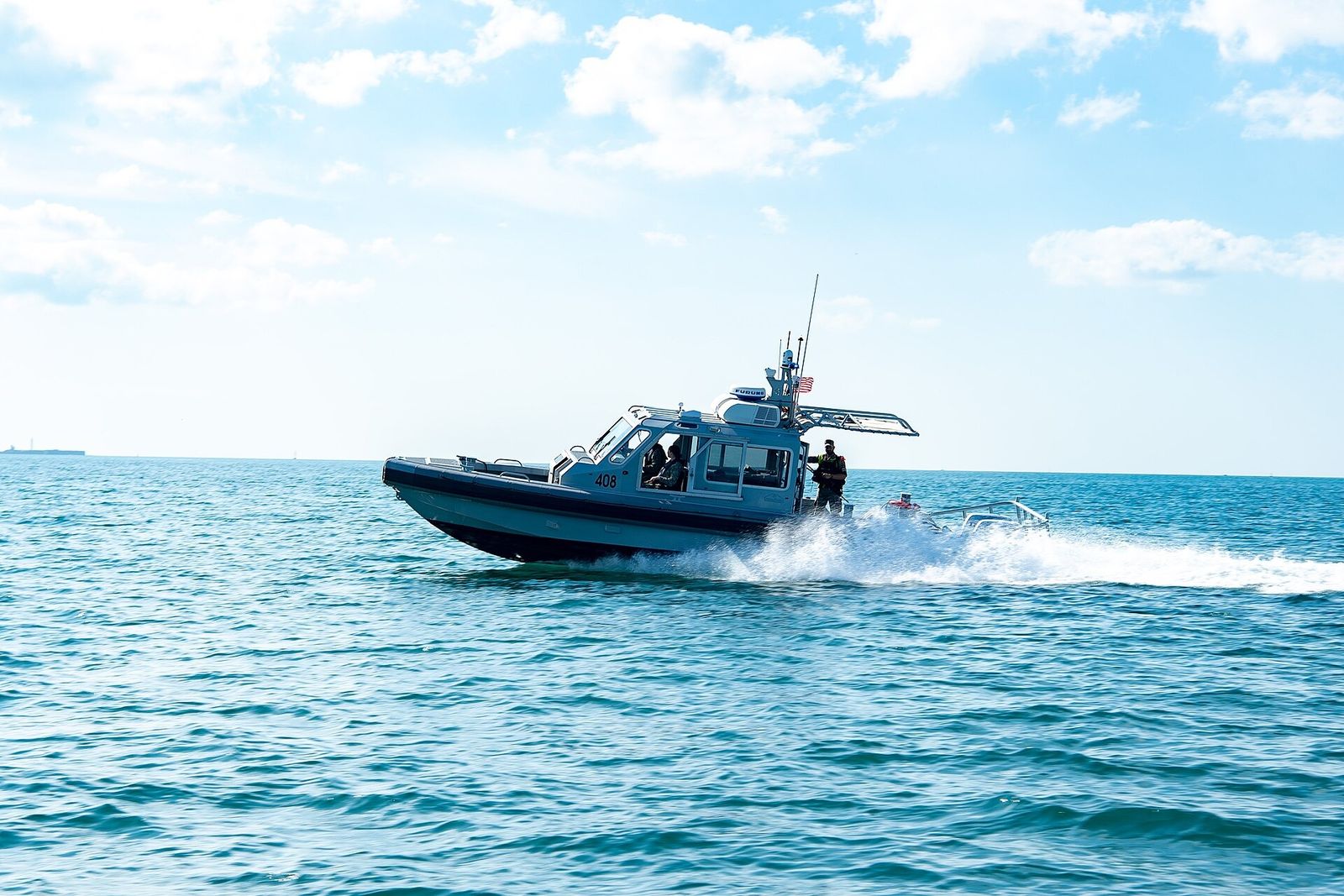
As craft go faster, the familiar rules of displacement ship design give way to new physics: support from dynamic lift, air cushions or hydrofoils, rapidly changing resistance and new forms of instability. This engineering-focused course covers hydrofoils, air cushion vehicles, hard chine planing craft and the high-speed context for multihull powering. It explains lift and containment, force balance, stability and the empirical prediction methods that designers use as speed rises. Learners study hydrofoil lift-control methods and foil arrangements, air cushion vehicle types, cushion containment and skirt systems, the jet theories that describe cushion flow, cushion pressure, lift fan power, drag and propulsion, the flow around planing hulls, spray root geometry, force balance and the Savitsky method, porpoising stability, and how speed regime and hullform choice govern powering across high-speed craft.
Course at a glance: Duration 20 hours · Self-paced online · 7 sections, 29 lessons, a 144-page downloadable course book
What you will learn
- Classify the main configurations and lift-control approaches used in hydrofoil craft.
- Explain how foil arrangement, angle of attack and immersion affect hydrofoil stability and performance.
- Explain how air cushion vehicles generate support, stability, drag and propulsion performance.
- Interpret the concepts behind ACV cushion pressure, lift fan power and drag estimates.
- Analyse the force balance, wetted geometry and empirical prediction methods used for hard chine planing craft.
- Explain porpoising and other dynamic stability limits of planing craft.
- Relate speed regime and hullform choice to the main powering considerations across high-speed craft, including multihulls.

Inside the course: a high-level summary, section by section.
Hydrofoil craft
The course opens with hydrofoils, which lift the hull clear of the water to reduce resistance and improve seakeeping at speed. Lift must be matched to weight as speed and attitude change, and the course compares the main lift-control methods. Surface-piercing foils change their immersed area as the craft rises or sinks, giving inherent height stability. Fully submerged foils keep the foil area fixed, so the control problem shifts to the lift coefficient, managed through flaps or incidence changes using feedback from sensors such as pressure or ultrasonic height sensors and pitch and roll gyros. Foil arrangements, including tandem configurations, are explained in terms of how load is shared between foils and why interference between them limits performance. Hydrofoil stability and the effects of angle of attack and immersion depth on lift, drag and ventilation and cavitation complete the section. Ventilation, where air is drawn down onto the foil’s suction side, and cavitation at high speed can both cause sudden losses of lift, which is why foil design and immersion depth must be considered together.
Air cushion vehicles
Air cushion vehicles are supported by a cushion of pressurised air. ACV types range from fully amphibious hovercraft to sidewall craft and surface effect ships. Cushion containment is the central design problem: the air must be held under the craft with minimum leakage. Peripheral jet and sidewall craft are compared, and flexible skirt systems, which allow the craft to pass over waves and obstacles while maintaining the cushion, are explained. ACV stability mechanisms in roll and pitch, and how skirt geometry and cushion compartmentation provide them, are discussed.
Cushion flow theory, lift power and drag
Thin jet and thick jet theories describe how a peripheral jet contains the cushion and how cushion pressure relates to jet momentum and geometry. Feeding states and forward speed effects show how the flow changes in operation, and plenum craft flow describes the simpler arrangement in which the fan pressurises a chamber directly. Cushion pressure levels determine the footprint and loading of the craft. Lift fan power depends on cushion pressure and the air flow needed to replace leakage, linking craft weight, hover gap and power. ACV drag includes aerodynamic, momentum, wave-making and skirt contact components, and propulsion choices such as air propellers and water jets are compared.
Hard chine planing craft
Planing craft are supported mainly by hydrodynamic lift at speed. The course explains planing flow basics, the transition from displacement to planing, and spray root geometry, which defines the wetted area of the hull. The force balance on a planing hull involves weight, hydrodynamic lift, thrust and drag acting at different points, and the equilibrium trim and wetted length follow from that balance. The Savitsky method is presented as the classic empirical approach for predicting lift, drag and trim of prismatic planing hulls, and systematic series and appendage effects extend the analysis to real hulls. Porpoising, a coupled pitch and heave oscillation, is explained as a dynamic stability limit, with the factors that make a craft more or less prone to it.


Speed regime and powering
The final technical section relates speed and hullform. Round bilge hulls perform well in the semi-displacement regime, while hard chine forms are preferred at higher speeds. The course places multihull powering in the high-speed context, explaining why slender hulls and their interaction affect resistance and power, and draws together the main powering considerations across high-speed craft types.
Choosing the right support system
A central idea of the course is that each support system has its own speed range and trade-offs. Planing hulls are relatively simple and robust but suffer high slamming loads and resistance in waves. Hydrofoils offer excellent seakeeping and low resistance once foilborne but add complexity, draught and control requirements. Air cushion vehicles provide amphibious capability and low water contact but need lift power and careful skirt design. Understanding the physics behind each option allows designers to match the craft type to the mission, whether that is a recreational powerboat, a fast ferry, a patrol craft or a rescue vehicle, and to appreciate why hybrid concepts combining two support mechanisms are sometimes chosen.
Why this matters in practice
High-speed craft are used for roles such as passenger ferries and patrol. Designers and engineers need to understand how different support systems work, how to estimate resistance and power, and how to avoid dynamic instabilities. This course provides the physical understanding and prediction methods needed to evaluate and develop high-speed craft concepts, and to judge which support system best suits a given speed, payload and operating environment, and to explain those choices clearly to owners, builders and operators.
Key takeaways
You leave able to classify hydrofoil configurations and lift-control methods, explain ACV cushion containment, stability, lift power and drag, analyse planing hull force balance using the Savitsky method, recognise porpoising and relate speed regime and hullform to powering.
How you study
The course is delivered fully online and is self-paced, so you can fit roughly 20 hours of study around professional commitments. Lessons combine clear explanation with examples, diagrams and short interactive checks, and the main sections end with graded quizzes (5 in total) so you can confirm you can apply each method before moving on. A 144-page course book can be downloaded and printed for offline reading and later reference.
Course contents
- Hydrofoils: Hydrofoil Background; Lift Control Methods; Foil Arrangements; Hydrofoil Stability; Angle and Immersion Effects
- Air Cushion Vehicle Basics: ACV Types; Cushion Containment; Peripheral and Sidewall Craft; Flexible Skirt Systems; ACV Stability Mechanisms
- ACV Performance and Power: Thin Jet Theory; Thick Jet Theory; Feeding States; Forward Speed Effects; Plenum Craft Flow; Cushion Pressure Levels; Lift Fan Power; Drag and Propulsion
- Hard Chine Planing Craft: Planing Flow Basics; Spray Root Geometry; Force Balance; Savitsky Method; Series and Appendages; Porpoising Stability
- High-Speed Craft Context: Speed and Hullform; Round Bilge Context; Multi-Hull Powering Context
- Summary: Key Takeaways
Who this course is for
This course is for engineering graduates, naval architects, small craft designers and boatbuilders who want an engineering understanding of high-speed and recreational craft. A grounding in basic naval architecture, fluid mechanics and resistance is helpful.
Frequently asked questions
How long does Recreational and High Speed Craft take?
The course is designed for about 20 hours of study. It is self-paced and fully online, so you can spread it over a few weeks or complete it more quickly.
What is covered?
The course is organised into 7 sections with 29 lessons, moving from foundations to applied methods, as summarised above.
Is there material to keep after the course?
Yes. A downloadable 144-page course book accompanies the lessons for offline reading and later reference.
How is progress checked?
Each main section closes with a graded quiz (5 in total, with a pass mark of 80%). The quizzes test understanding of the concepts and methods explained in the lessons rather than memorisation, and you can review the relevant lessons before attempting them.
Can I record this study for my own professional development?
Yes. The course notebook includes a self-assessment of the course objectives before and after study, a reflection page and a learning log, which you can use to keep your own record of professional development.
Duration: 20 hours
Related courses: K02 – Marine Structural Composites & High-Speed Craft; K03 – Composite Materials in Marine Structures; B06 – Resistance & Propulsion; I01 – Sail Yacht Design and Technology
Enrol
Study at your own pace and work through the full course material, worked examples and section quizzes. Enrol in K01 – Recreational and High Speed Craft →
Recent Comments