
A02 · Naval Architecture and Ship Design
A02 – Ship Hydrostatics and Stability Foundations
This online course in ship stability from Oceans Technology Higher Education is designed for about 20 hours of study. It refreshes form coefficients, centre-of-gravity (KG) bookkeeping, sinkage and trim, initial stability from KB, BM, KM and GM, the link between GM and roll period, and hydrostatic calculations with Bonjean curves. It suits engineering graduates and practising engineers moving into naval architecture, marine surveying, ship operations or offshore support.
View on our learning platformPay securely by debit or credit card, or PayPal. No PayPal account needed.
Course Content
1. Introduction 1 lesson
- 1.1 Welcome
2. Ship Terminology and Form 4 lessons
- 2.1 Hull Terms and Support
- 2.2 Coefficients of Form
- 2.3 Terminology Practice
- 2.4 Quiz 1
3. Weights and Center of Gravity 5 lessons
- 3.1 CG Bookkeeping
- 3.2 Sinkage and Trim
- 3.3 Weight Shifts in Service
- 3.4 Loading Problem Practice
- 3.5 Quiz 2
4. Initial Stability 5 lessons
- 4.1 KB, BM, KM, and GM
- 4.2 Small-Angle Righting
- 4.3 GM and Roll Response
- 4.4 Stability Problem Practice
- 4.5 Quiz 3
5. Hydrostatic Calculations 5 lessons
- 5.1 Numerical Integration
- 5.2 Bonjean Curves
- 5.3 Curves of Form
- 5.4 Incomplete Data Methods
- 5.5 Quiz 4
6. Summary 1 lesson
- 6.1 Key Takeaways
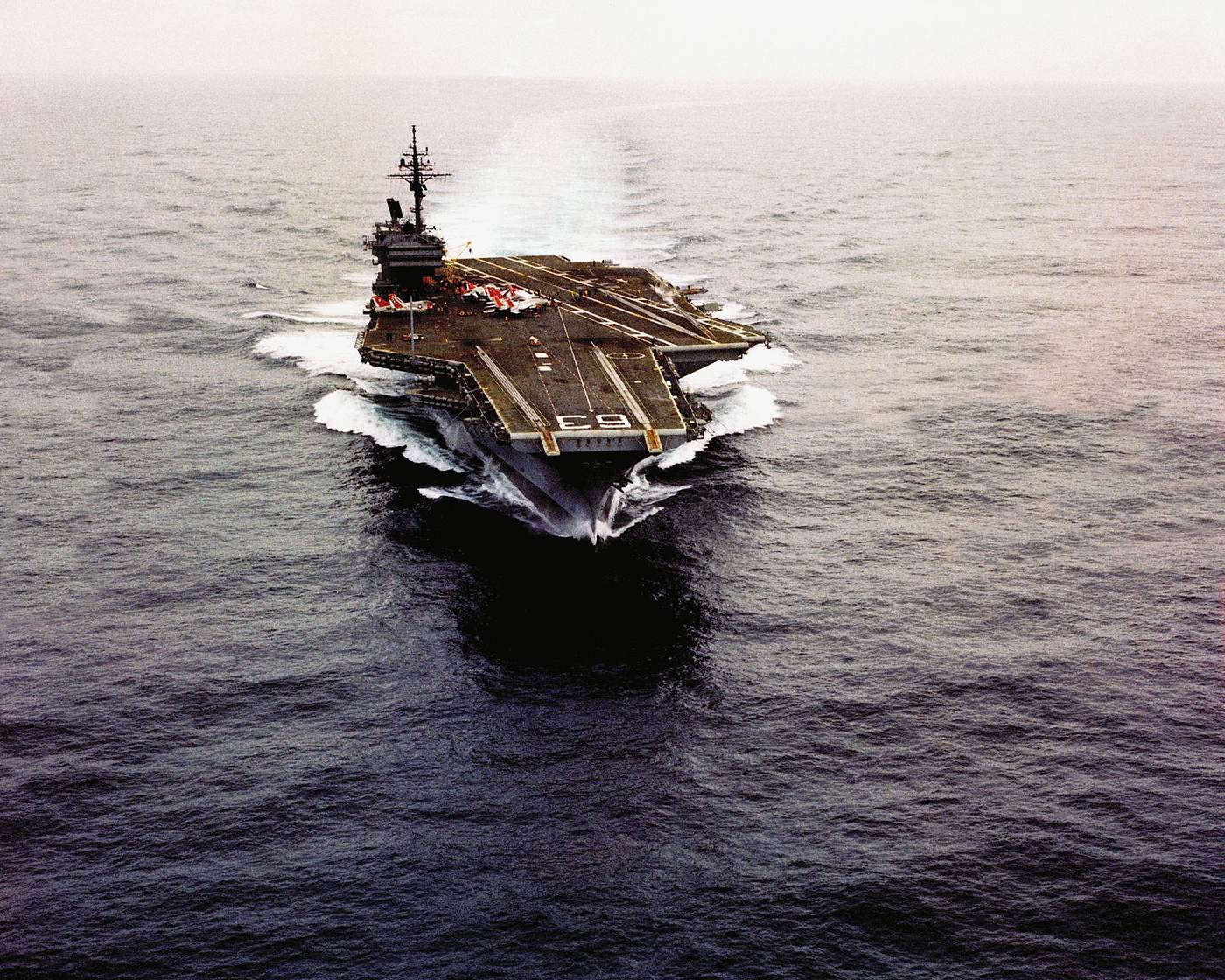
This online course in ship stability from Oceans Technology Higher Education is designed for about 20 hours of study. It refreshes form coefficients, centre-of-gravity (KG) bookkeeping, sinkage and trim, initial stability from KB, BM, KM and GM, the link between GM and roll period, and hydrostatic calculations with Bonjean curves. It suits engineering graduates and practising engineers moving into naval architecture, marine surveying, ship operations or offshore support.
Hydrostatics is the arithmetic of a ship at rest, and stability is what that arithmetic protects. This course gives engineers a disciplined, problem-driven route through both. Starting with the hull-form vocabulary and coefficients that frame every calculation, it moves into the weighted-average bookkeeping that predicts how additions, removals and shifts of weight change a ship's centre of gravity, sinkage and trim. It then develops initial stability through KB, BM, KM and GM, connects metacentric height to roll behaviour, and finishes with the hydrostatic workflow itself: numerical integration, Bonjean curves and curves of form. Practice is built around exam-style problems, and the course also trains a professional habit that is often overlooked: recognising when the available data are incomplete and stating clearly what is needed to finish the job.
Course at a glance: Duration 20 hours · Online · 6 sections, 21 lessons, a 84-page downloadable course book
What you will learn
- Define the key ship-geometry terms and form features, such as tumblehome, flare, sheer, subdivision and load line, and recognise them on a hull.
- Explain what the block, midship-section, prismatic and waterplane coefficients each measure, and why the prismatic coefficient matters.
- Calculate changes in KG, parallel sinkage and trim for weight additions, removals and shifts using weighted-average methods.
- Determine initial stability from KB, BM, KM and GM, and apply the small-angle righting-arm relationship.
- Relate metacentric height to roll period, ship "stiffness" and the limits of the fixed-metacentre assumption.
- Use Bonjean curves and numerical integration to work towards displacement, LCB, KB and other hydrostatic outputs.
- Choose a sound solution path when source data are incomplete and state precisely which inputs are missing.

Inside the course: a high-level summary, section by section.
Ship terminology and form
Every hydrostatics problem starts with the correct vocabulary, and this section makes sure that foundation is solid. Rather than memorising definitions, you learn to recognise what each term means when you look at a hull, a deck profile or a load-line question. Tumblehome describes hull sides that curve inward above the waterline, so beam reduces towards the deck. Flare is the opposite: sides that curve outward above the waterline, commonly used at the bow to shed spray and add reserve buoyancy and deck area forward. Subdivision and the load line link geometry to safety, because the deepest permitted draft can be governed by a vessel's watertight arrangement and damage-stability case, particularly for passenger ships. The section also contrasts hydrostatic support with hydrodynamic and semi-planing support, since the way water carries a vessel changes how it should be analysed.
The coefficients of form then give a compact numerical description of hull shape. The block coefficient compares the displaced volume with a box of the same principal dimensions, the midship-section coefficient compares the immersed midship area with a rectangle, the prismatic coefficient shows how volume is distributed along the length, and the waterplane coefficient describes how full the waterplane is at the surface. You learn why names that sound intuitive can mislead, and why the prismatic coefficient is especially useful when thinking about how a hull's fullness is spread fore and aft. Terminology practice consolidates these ideas with the kind of short definition questions that commonly catch candidates out.
Weights and centre of gravity
The second section turns to the bookkeeping that keeps a ship's loading condition under control. The central tool is the weighted-average form for the centre of gravity: the new KG is found from the old displacement and KG, plus or minus the moment of the weight added or removed, divided by the new displacement. The same moment logic applies longitudinally and transversely, so a single method handles vertical, fore-and-aft and athwartships effects.
You then learn to distinguish the three classic responses to loading. A weight placed at the longitudinal centre of flotation produces parallel sinkage with no change of trim. A weight placed forward or aft of it produces both sinkage and trim. A weight already aboard and shifted transversely leaves displacement unchanged but moves the ship's centre of gravity sideways, which can create list. The course sets out a clear workflow for each case: identify the physical situation, compute the moments, and then use the hydrostatic relationships, such as tonnes per unit immersion and the moment to change trim, to convert those moments into sinkage and trim. Loading problems drawn from realistic service situations, such as taking on cargo forward of midships, put that workflow into practice.


Initial stability
With KG established, the course develops the classic initial-stability relationships. KB locates the centre of buoyancy, BM depends on the second moment of the waterplane divided by displaced volume, and KM is their sum. The metacentric height, GM, is KM minus KG, and it is the single most important indicator of a ship's restoring tendency at small angles. For small heel angles the righting arm is approximated by GZ equal to GM multiplied by the sine of the heel angle, which turns stability into a calculable righting moment.
The same idea connects directly to motion. A larger GM makes a ship stiffer, with a shorter and sharper roll period, while a smaller GM gives a softer, longer and often more comfortable roll. The course explains why initial stability is dominated by waterline beam, why increasing beam shortens the roll period, and why the metacentre is not fixed at larger angles, which is the point at which the small-angle model must give way to full righting-arm curves. Stability practice problems reinforce when a question calls for calculation and when it is really a test of physical reasoning.
Hydrostatic calculations
The final technical section explains how hydrostatic properties are actually produced. Numerical integration, such as Simpson's Rule, combines measurements taken at stations along the hull into areas, volumes and moments. Bonjean curves provide the sectional input: for each station they give the submerged sectional area at any draft, so that a chosen waterline can be laid across the profile and the areas read off. Integrating those areas along the length gives displaced volume and displacement, and taking moments gives the longitudinal centre of buoyancy and KB.
Curves of form then present the outputs a naval architect relies on, including displacement, the longitudinal centre of flotation, tonnes per unit immersion and the moment to change trim, all as functions of draft. You learn what each represents in the calculation workflow and which data set is needed to evaluate it at a given condition.
A distinctive part of this course is its treatment of incomplete data. Real projects and archived problems do not always include every table or drawing. Rather than forcing an unsupported number, you learn to describe the correct calculation path, identify the missing hydrostatic inputs and state what would be needed to complete the result. This is a valuable professional skill: it keeps calculations defensible and makes clear to a reviewer exactly what has and has not been verified.
Key takeaways
The course closes by linking the four themes into one picture: geometry and form coefficients describe the hull, weight bookkeeping defines the loading condition, initial stability judges the ship's restoring tendency, and hydrostatic curves provide the data that tie them together. You leave able to approach a hydrostatics or stability question methodically, check whether your answer makes physical sense, and recognise the boundary at which more advanced large-angle and damage-stability methods are needed. Throughout, the emphasis is on method selection and clear reasoning rather than rote formula use, so the skills transfer directly to design reviews, loading assessments and further study in ship stability.
How you study
The course is delivered fully online, so you can fit roughly 20 hours of study around professional commitments. Lessons combine clear explanation with examples, diagrams and short interactive checks, and the main sections end with graded quizzes (4 in total) so you can confirm you can apply each method before moving on. A 84-page course book can be downloaded and printed for offline reading and later reference.
Course contents
- Ship Terminology and Form: Hull Terms and Support; Coefficients of Form; Terminology Practice
- Weights and Center of Gravity: CG Bookkeeping; Sinkage and Trim; Weight Shifts in Service; Loading Problem Practice
- Initial Stability: KB, BM, KM, and GM; Small-Angle Righting; GM and Roll Response; Stability Problem Practice
- Hydrostatic Calculations: Numerical Integration; Bonjean Curves; Curves of Form; Incomplete Data Methods
- Summary: Key Takeaways
Who this course is for
This course suits engineering graduates and practising engineers who need a rigorous refresher in ship hydrostatics and stability, including those moving into naval architecture, marine surveying, ship operations or offshore support from another engineering field. It is also a strong preparation for anyone revisiting hydrostatics for further study or professional development. A working knowledge of algebra, basic trigonometry, centroids and moments is helpful; no specialist naval-architecture software is required.
Using A02 as self-study CPD
A02 gives about 20 notional hours of structured, self-directed learning. A course book, a learning log and a reflection page help you keep evidence.
- South Africa (ECSA, PrEng / PrTechEng): this course is not ECSA-validated. As a guide only, ECSA counts 1 CPD credit for every 10 notional hours, and its Category 1b covers self-study of non-validated material where you can show evidence of the activity. You may be able to claim it under ECSA’s current CPD rules. You are responsible for checking the rules and keeping your records.
- UK (Engineering Council, CEng / IEng / EngTech): the Engineering Council sets no minimum CPD hours. Registrants plan, record and reflect on their CPD, and their institution may add its own rules. You can log A02 as self-directed learning, with your own reflection on what you applied.
- Other countries: the course is fully online, so you can study it from anywhere with an internet connection, including India, the Middle East, Australia, the USA and elsewhere. It is not currently recognised or accredited by professional bodies in those countries. You may be able to record it as self-directed learning in your own CPD log; check your professional body’s rules and keep your own evidence.
- Recognition: A02 is not currently recognised, accredited or endorsed by ECSA, IMarEST, RINA or any other professional body. Recognition by RINA and others is being pursued, and we will update this page if that changes.
Frequently asked questions
How long does Ship Hydrostatics and Stability Foundations take?
The course is designed for about 20 hours of study. It is fully online, so you can spread it over a few weeks or complete it more quickly.
What is covered?
The course is organised into 6 sections with 21 lessons, moving from foundations to applied methods, as summarised above.
Is there material to keep after the course?
Yes. A downloadable 84-page course book accompanies the lessons for offline reading and later reference.
How is progress checked?
Each main section closes with a graded quiz (4 in total). The quizzes test understanding of the concepts and methods explained in the lessons rather than memorisation, and you can review the relevant lessons before attempting them.
Can I record this study for my own professional development?
Yes. The course notebook includes a self-assessment of the course objectives before and after study, a reflection page and a learning log, which you can use to keep your own record of professional development.
Is there an online ship stability course for practising engineers?
Yes. A02 is a fully online ship stability course of about 20 hours, so you can start at any time and fit it around work. Every main section ends with worked problem practice on real loading and stability cases.
Which ship stability topics does A02 cover?
A02 covers weight and KG bookkeeping, parallel sinkage and trim, weight shifts in service, KB, BM, KM and GM, the small-angle righting arm and GM and roll response. It finishes with numerical integration, Bonjean curves, curves of form and how to work when source data are incomplete. Large-angle stability, free-surface losses and angles of loll are covered in A18 – Naval Architecture Fundamentals.
Do I need naval architecture software or prior study for A02?
No specialist naval architecture software is needed. A working knowledge of algebra, basic trigonometry, centroids and moments is helpful. If you are completely new to the subject, A01 – Principles of Naval Architecture is a gentler starting point.
Is A02 accredited, and can it count towards my CPD?
No. A02 – Ship Hydrostatics and Stability Foundations is not currently accredited, validated or endorsed by ECSA, RINA, IMarEST or any other professional body; recognition by RINA and others is being pursued. As a guide only, ECSA counts 1 CPD credit per 10 notional hours, so about 20 hours of study may count towards your own CPD record as self-study. Check with your professional body.
Can I log A02 for CEng or IEng CPD?
You can record it as self-directed learning in your institution’s CPD record, with your own reflection. It is not recognised or endorsed by IMarEST, RINA or any other institution.
Can I study A02 from outside the UK?
Yes. A02 is delivered fully online, so you can study it from South Africa, India, the Middle East or anywhere else with an internet connection. The course book can be downloaded for offline reading.
Duration: 20 hours
Related courses: A01 – Principles of Naval Architecture: Support, Form, and Stability; A18 – Naval Architecture Fundamentals; A04 – Project Introduction to Hydromechanics; B01 – Introduction to Marine Engineering & Naval Architecture
Enrol
Study at your own pace and work through the full course material, worked examples and section quizzes. Enrol in A02 – Ship Hydrostatics and Stability Foundations →
Recent Comments