
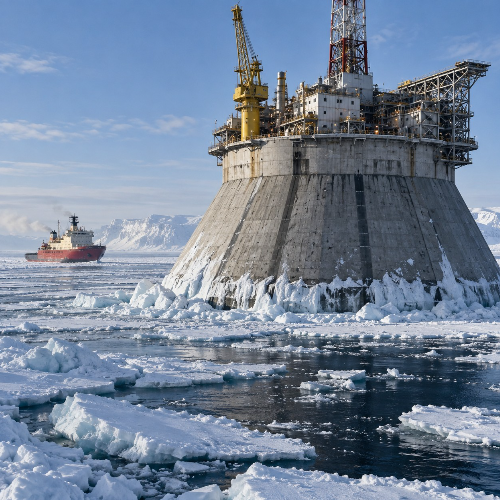
D12 – Arctic Offshore Engineering Part 2
A graduate-level course on Arctic offshore engineering, focusing on Arctic offshore development, ice mechanics, design loads, operations, and field-development decisions in high-latitude environments. It is an applied and specialised follow-on to the foundational Arctic offshore engineering course.
£299.00
2 hours 51 minutes
Focused, self-paced learning designed to fit around professional schedules.
Online, self-paced
Study online at a pace that fits your schedule.
16 sections
Structured curriculum sections.
English
Language of instruction for this course.
Quiz count: 14 total
Knowledge checks and assessed activities.
60 lessons
Focused lessons organised into a clear learning path.
Course overview
A graduate-level course on Arctic offshore engineering, focusing on Arctic offshore development, ice mechanics, design loads, operations, and field-development decisions in high-latitude environments. It is an applied and specialised follow-on to the foundational Arctic offshore engineering course.
What you will learn
Explain how sea ice forms, is structured, and is classified for engineering purposes.
Analyse regional Arctic ice conditions and iceberg hazards relevant to offshore siting and design.
Apply ice mechanics, fracture mechanics, and code-based design principles to estimate ice actions on offshore structures.
Evaluate Arctic-specific operational challenges including marine icing, ice management, dynamic positioning, and wave–ice interaction.
Assess geotechnical, petroleum, and emergency-preparedness considerations within an Arctic field-development context.
Develop and justify a preliminary Arctic offshore field-development concept using realistic environmental and design data.
Skills and knowledge
Sea ice mechanics
Ice loads
Arctic design
Marine icing
Ice management
Wave-ice interaction
Permafrost
Field development
Course curriculum
Introduction
1.1 Welcome
Course Context
2.1 Why Arctic Offshore
2.2 Development Building Blocks
2.3 Course Delivery Context
2.4 Quiz 1 (quiz)
Sea Ice Formation
3.1 Ice Crystal Structure
3.2 Sea Ice Formation
3.3 Growth and Substructure
3.4 Classification of Ice
3.5 Quiz 2 (quiz)
Regional Ice Conditions
4.1 Why Climatology Matters
4.2 Barents Sea Conditions
4.3 Pechora and Kara Seas
4.4 Icebergs and Design Basis
4.5 Quiz 3 (quiz)
Ice Continuum Mechanics
5.1 Continuum Description
5.2 Elastic Behaviour
5.3 Creep and Rheology
5.4 Stress Components
5.5 Quiz 4 (quiz)
Fracture Mechanics
6.1 Fracture Framework
6.2 Ductile to Brittle
6.3 Failure Modes in Design
6.4 Quiz 5 (quiz)
Ice Loads
7.1 Load Mechanisms
7.2 Vertical Structures
7.3 Sloping Structures
7.4 ISO Ice Actions
7.5 Quiz 6 (quiz)
Load Combinations
8.1 Combination Principles
8.2 Code Frameworks
8.3 Worked Design Check
8.4 Quiz 7 (quiz)
Marine Icing
9.1 Icing Physics
9.2 Forecasting and Consequences
9.3 Countermeasures
9.4 Quiz 8 (quiz)
Ice Operations
10.1 Ice Management Strategies
10.2 Dynamic Positioning in Ice
10.3 Ice Tank Testing
10.4 Quiz 9 (quiz)
Wave-Ice Interaction
11.1 MIZ Wave Physics
11.2 Interpreting Response Data
11.3 Engineering Relevance
11.4 Quiz 10 (quiz)
Coastal Geotechnics
12.1 Permafrost and Cryopegs
12.2 Thermoabrasion and Coasts
12.3 Transition Zone Structures
12.4 Quiz 11 (quiz)
Field Development Planning
13.1 Petroleum Engineering Aspects
13.2 Arctic Development Strategy
13.3 Quiz 12 (quiz)
Emergency Preparedness
14.1 Preparedness Framework
14.2 Oil Spill Response in Arctic Waters
14.3 Quiz 13 (quiz)
Arctic Case Study
15.1 Case Study Brief
15.2 Integrated Design Reasoning
15.3 Field Development Project
15.4 Quiz 14 (quiz)
Summary
16.1 Key Takeaways
Ready to enrol?
£299.00